Erasmus+ Programme
at The Grammar School
The School Guide offers a complete overview of life at The Grammar School — from our academic structure and policies to extracurricular opportunities and school values.
Browse through the guide below to learn more about our community and what makes our school unique.
About Erasmus+
Erasmus+ is the EU’s flagship programme for education, training, youth, and sport in Europe, with an estimated budget of €26.2 billion — nearly double the funding of its 2014–2020 predecessor. The 2021–2027 programme focuses on social inclusion, the green and digital transitions, and youth participation in democratic life.
It supports the priorities set out in the European Education Area, the Digital Education Action Plan, and the European Skills Agenda. The programme’s four key priorities are:
- Environment and the fight against climate change
- Inclusion and diversity
- Digital transformation
- Participation in democratic life
Erasmus+ focuses on three main Key Actions. Our school participates under Key Action 1 – Learning Mobility of Individuals, which aims to modernise education and training systems by supporting mobility projects that foster innovation, collaboration, and the exchange of experiences at a European level.


Our Project
Our current Erasmus+ project focuses on developing essential skills for the digital future.
- Topic: Develop AI literacy for teachers and students: The knowledge and skills that enable humans to critically understand, evaluate, and use AI systems and tools to safely participate in an increasingly digital world.
- Participants: Class 2 and Class 3 students and teachers.
- Activities: Mobilities, workshops, collaborative international projects, and intercultural exchanges aimed at developing AI literacy and global citizenship.
- Aim: To equip students with the understanding and practical skills needed to navigate the increasingly digital world shaped by artificial intelligence.
Through this initiative, The Grammar School aims to empower students and educators to thrive in a world where technology and human insight work hand in hand.
ERASMUS+ TRIP TO GERMANY:
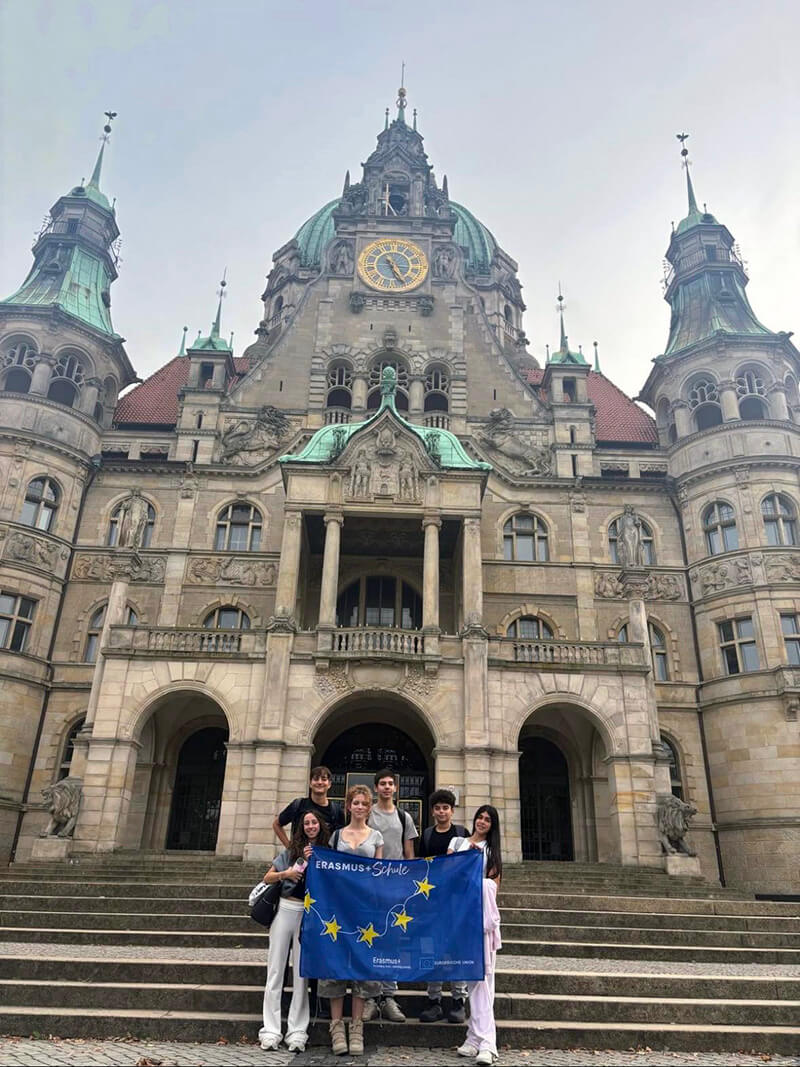
In October 2026, we were delighted to participate in an inspiring Erasmus+ mobility hosted by IGS Isernhagen school in Hannover Germany, combining innovation, digital learning and culture.
The visit provided the students with a valuable opportunity for intercultural learning, personal development and the exchange of knowledge and experiences between different educational systems. During their stay, our students were welcomed into the school community and gained an insight into everyday school life and the German education system. Through interaction with German students and teachers, they had the opportunity to compare different school routines, learning environments and educational approaches, while developing their communication and social skills.
The programme combined educational, cultural and recreational activities to support learning both inside and outside the classroom. The students visited the Town Hall of Isernhagen, where they met the mayor and took part in an engaging discussion on a wide range of topics. The mayor spoke with the students about politics and civic life, historical developments, the differences and similarities between educational systems, and the rapid advancements in technology and their impact on society and education. This meeting gave the students the opportunity to ask questions, exchange ideas and gain a better understanding of how local communities function, while encouraging active citizenship and critical thinking.
They also explored Hannover through a walking tour and sightseeing activities and visited Hamburg, where they discovered important cultural and historical landmarks such as St. Michael’s Church and the Old Elbe Tunnel, as well as experiencing the city’s harbour. A school day trip to Berlin gave the students the opportunity to explore significant historical sites and deepen their understanding of German history and European heritage. Visits to Zero Latency and Heide Park added an element of experiential and informal learning, encouraging teamwork, cooperation and interaction among the students.
An important aspect of the mobility was the development of digital competences and digital literacy. Throughout the programme, students were encouraged to use smartphones, tablets and other digital devices for navigation, research, communication and documenting their experiences. They also explored the use of AI tools as a means of supporting learning, finding information and enhancing their understanding of the places they visited. This helped them reflect on the responsible and effective use of new technologies in education and everyday life.
Overall, this mobility strengthened AI literacy by helping teachers and students understand how AI and digital technologies can be meaningfully integrated into education, cultural learning, and collaboration. Through classroom observation, experiential visits, and immersive digital activities, participants moved beyond basic technology use to a deeper understanding of how AI can support learning, creativity, critical thinking, teamwork, and responsible digital citizenship.
Overall, our trip to Germany successfully combined formal, non-formal and informal learning. It strengthened intercultural awareness, communication, teamwork, independence and digital competences. Through experiential visits and immersive activities, the participants moved beyond basic technology use and developed a deeper understanding of how AI and digital tools can support learning, creativity, critical thinking and collaboration. The experience also helped build lasting connections between the participating schools and contributed to the wider Erasmus+ goals of promoting European cooperation, cultural understanding, inclusion and lifelong learning.
Our Erasmus+ Journey in Words:
This Erasmus+ school trip was truly exceptional for me and all the students that took part of it. I had the chance to see Germany’s culture, traditions and their way of living. I am glad I had people that cared about us and made our stay there joyful. It was an amazing experience that I will never forget.
Panayiotis Panayi – 3C
My Erasmus trip to Germany was a wonderful and unforgettable experience. I really enjoyed spending time with my classmates, my teachers and new people that I met in Germany. We visited the school, new places and learned about the German culture and educational system. I also improved my English and became more confident. It was a great opportunity to learn, have fun and make new memories. Thank you, Grammar School Limassol, for this amazing and invaluable opportunity.
Chrysia Demetriou – 3B
Our Erasmus trip was based in Hannover Germany, where we stayed for most of the visit and go to know the school, fellow students, the city’s streets, shops and daily rhythm. The host school organized a school day trip for us and their students to Hamburg. There we had the chance to explore the harbour, historical sites and the city centre. The host school also arranged a day at a theme park for team-building activities which became a relaxed and fun break filled with rides, group work, games with the use of technology and plenty of group photos. We also had the chance to spend a day in Berlin, experiencing its mix of history, culture, and bit-city energy, from famous landmarks to busy neighbourhoods. The combination of city exploration, travel by train and car, walking tours and time together as a group made the trip both educational and unforgettable.
Alexandros Stamoulis – 3B
During our Erasmus experience, Hannover was our main destination and where we spent most of our time. We also visited Hamburg, enjoyed a fun day at a theme park, and stayed in Berlin for two days. Each place offered something different, from sightseeing and learning about the German educational system and culture to simply having fun with friends. Overall, it was a memorable experience full of new places, great moments and lasting memories.
Matina Mala – 3B
My Erasmus trip lasted six days, with three days in Hannover -our host school, one day in Hamburg and two days in Berlin. In Hannover we visited the school that welcomed us and made us feel like home, and we also had the chance to meet with their Mayor. In addition, we visited an adventure park and spent the day with the German students with lots of team-building activities. We had a lot of fun exploring Hannover and spending time with the local students. In Hamburg, we had lots of sightseeing time to explore the city, while in Berlin we visited many landmarks and saw amazing sights. Overall, it was a really fun and unforgettable experience, and I made lots of great memories with my friends.
Phivos Iordanous – 3B
Cyprus Hosting Mobility
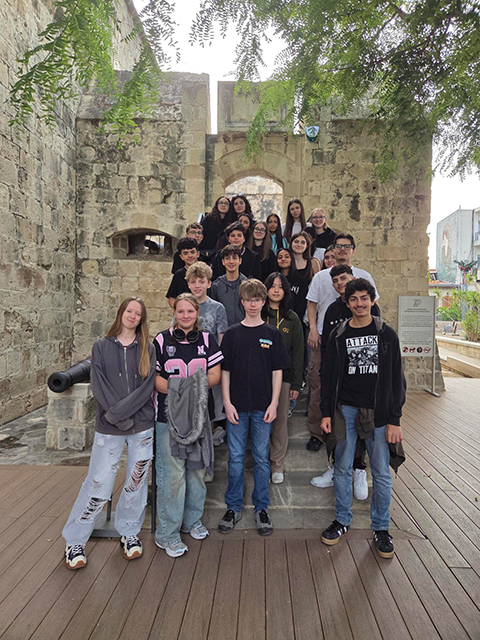
Our school recently hosted a vibrant Erasmus+ Educational and Cultural Exchange Week, filled with learning, creativity, and exploration. Students and teachers participated in a rich programme combining academic lessons, cultural experiences, and the use of innovative technologies such as Artificial Intelligence.
The week began with a warm welcome to all visiting schools. Representatives from each school gave presentations to introduce their countries, institutions and share their educational approaches. Our students then offered a guided tour of the school, helping guests become familiar with our facilities and activities. The morning continued with a Physical Education sports activity, promoting teamwork and engagement. In the afternoon, students visited the Paradox Museum in Limassol, where they experienced how learning can be simplified and enriched through creativity and technology. The museum’s interactive exhibits and optical illusions connected subjects such as math, physics, and history, demonstrating how AI and alternative teaching methods can make learning both engaging and meaningful.
The second day focused on innovation and cultural heritage. Students began with an AI lesson on Avatars led by experts from Frederick University, exploring how artificial intelligence is used to create digital identities. This was followed by a Graphics Lab workshop, where students learned how AI tools are transforming the world of digital design. In the afternoon, students visited the Medieval Limassol Castle, a historical site of great significance where Richard the Lionheart married Berengaria of Navarre in 1191. Exploring the ancient walls and museum collections gave students a vivid sense of Cyprus’s medieval past and its connection to European history.
The third day began with interactive English lessons encouraging students to communicate, collaborate, and share their cultural experiences. Later, a Professor from the University of Neapolis delivered a presentation on AI and its use in education, highlighting how emerging technologies are reshaping the learning experience and opening new pathways for students worldwide.
On Thursday, students and staff embarked on a cultural and educational excursion to Omodos, one of Cyprus’ most picturesque mountain villages. The group visited a local winery, a museum, and the historic monastery, gaining insight into the island’s rich traditions and craftsmanship. The visit concluded with a traditional Cypriot lunch, where participants enjoyed local food, hospitality, and a sense of community amidst the charming scenery of the Troodos Mountains.
The final day celebrated art, culture, and togetherness. Students visited the Cyprus Theatre Museum, taking part in an educational program on costume model making. The museum’s exhibits, including costumes, props, set designs, and photographs, offered a fascinating look into the history and evolution of theatre on the island. The week concluded with a closing ceremony at the Junior School, featuring a traditional brunch and a joyful Christmas performance by classes 4 and 5. The show brought smiles and festive spirit to everyone, providing the perfect ending to a week filled with learning, creativity, and cultural exchange.
Through the Erasmus+ programme, students and teachers had the unique opportunity to connect with peers from different schools, share ideas, and explore how Artificial Intelligence can transform education and make learning more engaging and accessible.
By combining technology with creativity and cultural exploration, the programme highlighted the importance of preparing students for a future where AI, critical thinking, and cross-cultural understanding go hand in hand. The week concluded not only with new friendships and unforgettable memories, but also with a renewed appreciation for the power of education to inspire curiosity, connection, and lifelong learning.
Mobility To Athens, Greece
In May 2026, we were delighted to participate in an inspiring Erasmus+ mobility hosted by 4o Gymnasio Dafnis in Athens, combining innovation, digital learning and culture. Throughout the five-day programme, participants engaged in experiential, collaborative, and AI-enhanced educational activities, including interactive school presentations, AI-supported lessons, Kahoot quizzes, digital teamwork projects, and immersive learning experiences.
Educational visits to important cultural and historical landmarks, including the Acropolis of Athens, Acropolis Museum, Ancient Agora of Athens, the War Museum Athens, the Museum of Cycladic Art, Frida Kahlo Immersive Athens and Syntagma Square were integrated into the school shadowing programme through the observation of language and computer science lessons, allowing participants to connect in-class educational practices with hands-on experiential learning using AI-supported, immersive, and digital tools.
The programme also included workshops, augmented reality gaming experiences, collaborative activities organised by the host school and by our accompanying teachers, and an educational day trip to Aegina Island, where participants explored the Temple of Aphaia and the Monastery of Agios Nektarios. The mobility concluded with a farewell ceremony, reflection activities, and certificate awards, celebrating the valuable intercultural experiences, digital literacy development, teamwork, and collaborative skills gained throughout the week.
Overall, this mobility strengthened AI literacy by helping teachers and students understand how AI and digital technologies can be meaningfully integrated into education, cultural learning, and collaboration. Through classroom observation, experiential visits, and immersive digital activities, participants moved beyond basic technology use to a deeper understanding of how AI can support learning, creativity, critical thinking, teamwork, and responsible digital citizenship.


Mobility To Matera, Italy
The ITSCG School in Matera, Italy, hosted the first mobility of our Erasmus+ project in October 2025. Our school participated with six students from classes 2 and 3, and three teachers.
Participants from both schools exchanged presentations that promoted intercultural understanding and collaboration. An IT Lab session enhanced digital teamwork, followed by visits to Matera’s key landmarks such as Piazza San Francesco, Casa Noha, and the Cathedral. Furthermore, students had the chance to join an AI Lab lesson introducing emerging technologies and digital thinking, then shadowed local students in an English class to enhance language and social skills. They also visited Matera SUM and experienced the Virtual Flying Stones VR installation, deepening their understanding of local history through immersive technology.
Teachers and students shadowed local classes across various subjects, including Navigation (with a flight simulator), and AI. A Physical Education session encouraged teamwork, while a visit to the Palombaro cisterns offered historical insights. Visits to Palazzo Lanfranchi and the “Discovering Matera Challenge” in the Languages Lab enriched cultural and communication skills. The final event, “First Steps of Collaboration: Matera & Limassol,” included a certificate ceremony and reflections on the week’s shared experiences, reinforcing the partnership between the two schools. The experience deepened historical knowledge, critical thinking, and digital literacy while blending culture with innovation for both teachers and students.